
Loving Touch: Creating Healthier Babies and Stronger Bonds With Infant Massage
Written by: Susan Swiat, Physical Therapist, PT, CEIM
Understanding Touch As A Critical Piece of Infant Development
The first year of parenthood is a great period of growth and adaptation in both an infant’s and a parent’s life. Challenges include identifying and meeting the baby’s needs and strengthening the bond between infant and caregiver.
Touch is the primary way newborn babies interact with their caregivers and experience their environment. Nurturing, or loving touch, is a way for parents to help ease the transition from the womb into the world and is a natural extension of the parent’s ability to communicate love and concern for their newborn.

What Is Infant Massage?
Infant massage is the practice of using gentle, responsive touch to support a baby’s physical, emotional, and neurological development. Unlike therapeutic massage for adults, infant massage is guided by the baby’s cues and focused on connection, communication, and regulation.
Is Infant Massage Safe?
When performed gently and responsively, infant massage is considered safe for most babies. Avoid massage if your baby has a fever, infection, rash, or recent vaccination site tenderness. If your baby was born prematurely or has medical concerns, consult your pediatrician before beginning.
The Physical Health Benefits of Infant Massage
A parent’s touch provides comfort, security and a host of health benefits for infants. Massage, performed on a regular basis strengthens the parent-child bond, and has been found to ease colic, promote deeper and longer sleep, soothe emotional stress and strengthen baby’s immune system- all huge pluses for baby and for mom and dad. Long term research studies have found that massage helped in weight gain and greater neurological development in premature newborns.

The Benefits Of Massage Explained
Emotional and Bonding Benefits of Infant Massage
Massage has plenty of emotional perks for baby and parents as well. These can include teaching infants that touch is a form of expression and teaches infants from birth that they are in charge of their own body and that it is ok for them to say “no” to people touching them. It can enable parents to be more receptive to their baby, learning their behavioral states and infant’s body language during massage. In fact, parents who massage their baby everyday are more likely to notice a change in their child’s physical condition.
Learning Your Baby’s Cues Through Touch
Parents learn when a baby is alert and ready for the experience. For instance, baby may avoid making eye contact when he’s not interested or not feeling well, and parents can then report changes to the pediatrician because they know when baby may be getting sick. Massage helps parents feel more confident in their new role by knowing that they can do something themselves to enhance the health and development of their child. Massage can provide quality time with a working parent and can involve fathers, especially if dad feels left out when mom is breastfeeding.
What Research Says About Infant Massage
The benefits continue and have been documented through many medical research studies. Skin stimulation through firm massage has been shown to speed the process of building the conductive material on the nerves in the brain and nervous system, therefore improving brain-body communication and enhancing neural cell firing. Dr. Tiffany Field, founder of the Touch Research Institute found that massage stimulates the vagus nerve which helps in the rhythmic contraction of the stomach and intestines that moves food material along the digestive tract. Massage may stimulate and aid in digestion and improve weight gain. This nerve also supplies the lungs and massage may help to deepen respiration and help children breathe better.

Infant Massage and the Nervous System
Massage provides both stress and relaxation for an infant, both being components of optimum learning conditions. Increased circulation, the air on the skin and the stimulation of the stroking are all potentially stressful to a newborn. These are balanced with the reassurance that the parent’s voice, odor and touch provide. This kind of balance is essential for the learning process. It is estimated that stress plays a part in 60 – 90% of all illnesses so it may follow suit that infant massage, which provides the balance of relaxation will assist infants in learning to effectively cope with stress and ultimately may be healthier because of it.
Infant Massage for Gas, Colic, and Digestion
Massage releases powerful chemicals into the bloodstream and therefore can assist in relieving discomfort from teething. Massaging the sinuses on the face can help clear them of excess mucus. Colic, can be defined as painful gas causing a distended, firm abdomen which takes an infant a long period of time to eliminate without assistance. Repeating a small series of strokes on the abdomen has been used to help move the gas and fecal matter through the colon, assisting in elimination. The stroking also helps the infant to relax so that tension does not escalate their discomfort.
Infant Massage for Better Sleep
Some infants sleep for longer periods following massage and appear to have longer periods of deep sleep. Many parents find that incorporating massage into a bedtime routine helps their baby relax and transition more easily to sleep. While massage is not a cure for sleep challenges, it can support a calm nervous system and deeper rest.
Developmental Benefits of Infant Massage
Developmental benefits are also apparent with massage. Massage increases the infant’s sensory and body awareness. When naming body parts during massage, parents will be teaching infants games, words and speech. This body awareness can also assist newborns who are still adapting to their new environment outside of the womb. It can also encourage midline orientation. Simple movements bring arms and legs together across the body to assist with coordination and balance.
When Can You Start Infant Massage?
Infant massage can begin in the early weeks after birth, once your baby is medically stable and you feel ready. Watching your baby’s cues is more important than focusing on age. Some babies enjoy massage from the start, while others may need time to adjust.
Do You Need Oil for Infant Massage?
Some families choose to use a small amount of natural oil to reduce friction on the skin. If using oil, select one that is fragrance-free and safe for sensitive skin, and always test a small area first.

How to Get Started With Infant Massage
It is best to learn the correct massage strokes from a certified instructor (CEIM) but there are also many books, articles and tutorials available online to get you started. Inside our Tummy Time Masterclass, we guide you through the fourth trimester with confidence and include a dedicated daily Infant Massage Routine designed to be simple, effective, and easy to follow. For families looking for hands-on instruction, Infant Massage USA can help you connect with certified instructors in your area.
Why Loving Touch Matters
Overall, massage is a wonderful way to empower parents and promote nurturing through parent-baby communication. Touch is your baby’s first language and there are many developmental benefits of positive, loving touch as part of baby’s early life- for you AND them!

Want More Support for the Fourth Trimester?
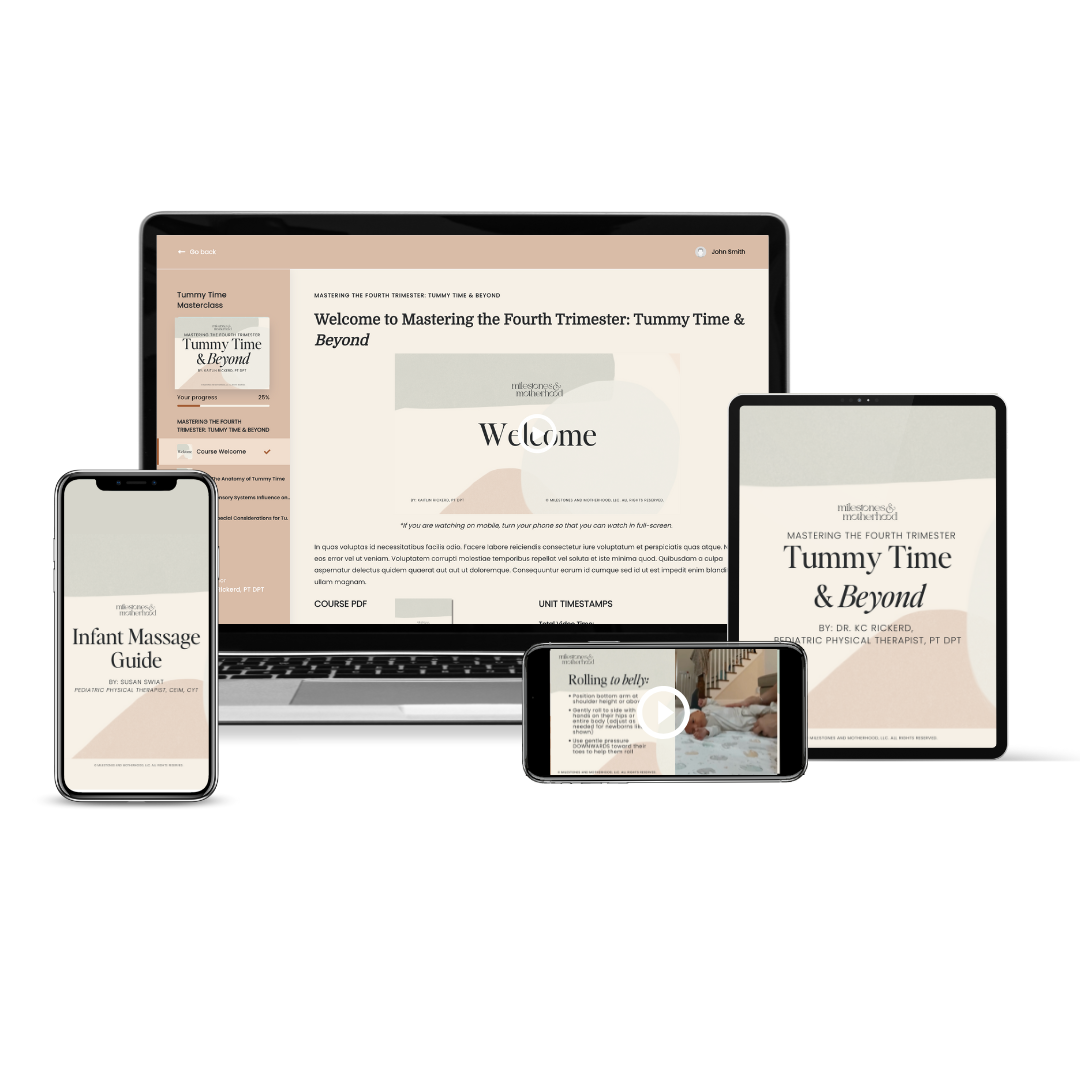
Want more support as you navigate the fourth trimester and your baby’s early development?
If loving touch and learning to read your baby’s cues has you wondering how to confidently support tummy time, movement, and regulation next, my Tummy Time & Beyond Course was created for you.
Inside, you’ll find:
Step-by-step guidance to help your baby thrive during the first 3 months of life
Simple strategies to transform tummy time from tears to confidence
Clear explanations of early gross motor development and what to focus on first
Tools to help you feel calm, capable, and supported instead of overwhelmed
And there is an entire Infant Massage module included.
Inside that section, you’ll receive:
A full infant massage tutorial from a Certified Infant Massage Instructor
Education on the benefits of infant massage for both baby and caregiver
A 15-minute calming bedtime massage routine
Printable guides outlining the strokes and movements
It’s designed to help you bond, regulate, and wind down with your baby, while building confidence in your role as their guide.
This course was built for real parents in the real fourth trimester — the ones juggling feedings, sleep deprivation, comparison, and the quiet worry of wanting to get this right.
You deserve to feel confident.
Your baby deserves to thrive.
Was this helpful? Save it for later!
